MRL vs Hydraulic Lift: Which Is Better for Buildings in Delhi NCR?
Choosing the right elevator is not simply a matter of selecting the latest technology. For building owners in Delhi NCR, the decision between an MRL lift and a hydraulic lift depends on several practical factors, including building height, available space, expected passenger traffic, installation requirements, operating costs and long-term maintenance.
If you are comparing MRL vs Hydraulic Lift, understanding how both systems fit your building can help you make a more informed investment.
MRL and Hydraulic Lifts: Why the Choice Matters
An elevator becomes part of a building's daily infrastructure. Once installed, its performance, maintenance requirements and operating expenses can affect the building for many years.
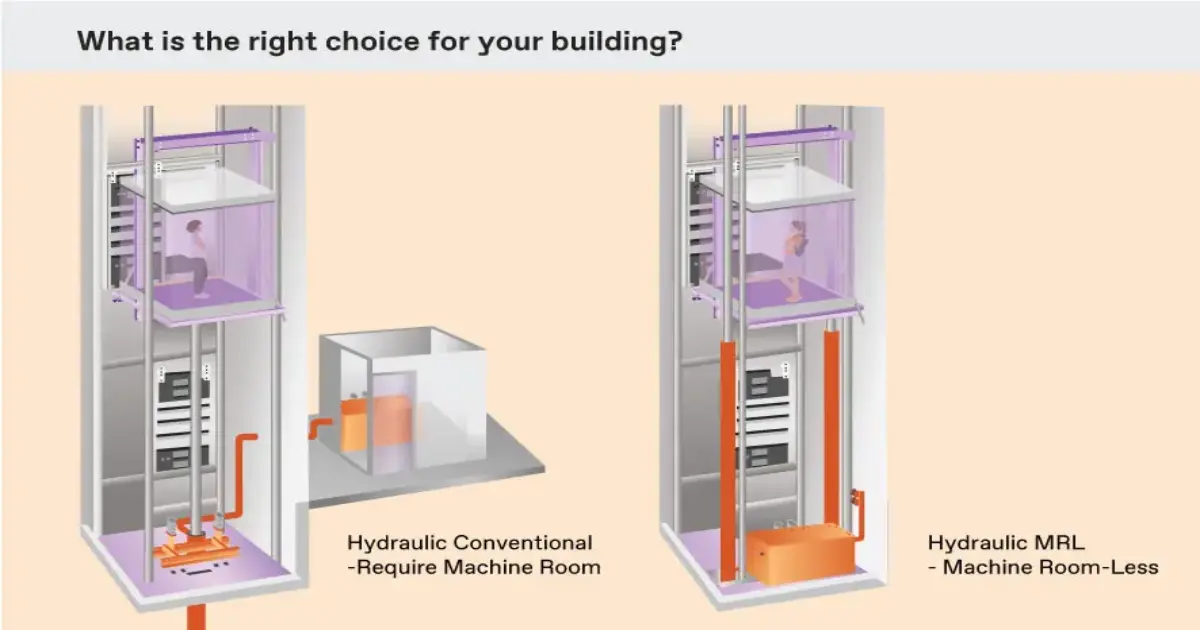
An MRL, or Machine Room Less lift, is designed without a separate machine room. Its traction equipment is generally integrated within the hoistway arrangement. A hydraulic elevator, on the other hand, uses hydraulic power to move the elevator car, making it a commonly considered option for certain low-rise applications.
There is no universal answer to which system is better. The right choice depends on the property.
Start With Your Building Type
The first question should be: Where will the elevator be installed?
For example, a lift requirement for a private residence can be very different from one for:
-
Apartment buildings
-
Villas and independent homes
-
Offices
-
Commercial properties
-
Hotels
-
Hospitals
-
Institutional buildings
-
Low-rise industrial or commercial premises
An MRL Lift in Delhi NCR can be a practical option where efficient use of building space and modern traction technology are priorities.
Hydraulic elevators may also be considered for buildings where the travel height and application make hydraulic operation suitable.
Consider the Number of Floors
Building height is one of the most important factors in an elevator selection decision.
For buildings with several floors and regular passenger movement, an MRL system may offer advantages because traction technology is well suited to vertical transportation across multiple levels.
For a relatively low-rise property with limited vertical travel, a hydraulic elevator may also be worth evaluating.
Therefore, when comparing MRL vs Hydraulic Elevator, don't select a system only because it is popular. Discuss the number of floors, travel distance and expected usage with an elevator professional.
How Much Space Is Available?
Space can become a major consideration during elevator planning, especially in an existing building.
One of the notable features of a Machine Room Less Lift is that it does not require a conventional separate machine room. This can provide greater flexibility during building design and renovation, subject to the specific elevator design and applicable requirements.
Hydraulic installations can have different space requirements because the system includes hydraulic equipment and associated components.
For a property where every square metre matters, comparing the complete installation layout—not just the lift car—is important.
MRL vs Hydraulic Lift: Cost Factors
The purchase price is only one part of elevator cost.
When evaluating MRL Lift Cost or Hydraulic Lift Cost, consider:
-
Elevator equipment
-
Shaft and structural preparation
-
Electrical requirements
-
Installation work
-
Civil work
-
Safety components
-
Site-specific modifications
-
Maintenance requirements
-
Long-term energy consumption
The final price can vary considerably depending on capacity, number of stops, finishes, specifications and site conditions.
That is why a reliable quotation should be based on an actual site assessment rather than a generic online price.
Think About Energy and Running Costs
Running cost becomes increasingly important when an elevator is used frequently.
MRL traction systems can be attractive for applications where energy efficiency and regular passenger movement are important considerations. However, actual energy consumption depends on the selected equipment, usage pattern, building height and other factors.
Hydraulic systems have their own operating characteristics and can be appropriate for specific low-rise applications.
Instead of asking only, “Which lift is cheaper?”, building owners should ask:
Which system provides the right balance between purchase cost, energy use, performance and maintenance for my building?
Maintenance Should Be Part of the Decision
An elevator is not a one-time purchase. Regular inspection and maintenance are essential for reliable operation and passenger safety.
Both MRL and hydraulic systems require professional maintenance, although their components and service requirements differ.
Before choosing an elevator company, ask about:
-
Preventive maintenance
-
Availability of replacement components
-
Breakdown support
-
Safety inspections
-
Service response
-
Annual maintenance options
-
Technical support after installation
Choosing a system that can be properly serviced in your area is just as important as selecting the technology itself.
What About Installation in Existing Buildings?
Delhi NCR has a large number of existing homes, offices and commercial properties where elevator installation may require careful planning.
In such situations, the available shaft space, structural conditions, electrical infrastructure and access for equipment must be evaluated before installation.
An Elevator Company in Delhi NCR should ideally conduct a site survey before recommending MRL or hydraulic technology.
This helps identify practical limitations before the project begins and can reduce unexpected changes during installation.
MRL or Hydraulic: Which One Is Better for Residential Buildings?
For residential projects, the decision depends on the building's size, number of floors, available space, passenger requirements and budget.
An MRL system may be attractive for a multi-storey residential building where space efficiency and regular passenger movement are important.
A hydraulic system may be considered for suitable low-rise residential applications where its installation characteristics match the project.
The best residential elevator is therefore not necessarily the most expensive or technologically advanced option. It is the one that fits the building and its long-term requirements.
Which Is Better for Commercial Buildings?
Commercial buildings generally experience more frequent elevator usage than private residences.
For such properties, building owners should consider:
-
Expected passenger traffic
-
Number of floors
-
Peak-hour demand
-
Lift capacity
-
Travel distance
-
Energy consumption
-
Reliability
-
Maintenance support
An MRL elevator can be a strong option for many commercial applications, particularly where space utilization and frequent vertical transportation are important.
Hydraulic technology can still be relevant for specific low-rise commercial requirements.
Delhi NCR Conditions Also Matter
Delhi NCR includes a wide variety of residential, commercial and institutional properties. Projects in Delhi, Noida, Gurgaon, Ghaziabad and Faridabad can have different building layouts and installation conditions.
For this reason, elevator selection should not be based solely on a standard product brochure.
A professional site evaluation should consider:
-
Available shaft dimensions
-
Number of floors
-
Required capacity
-
Building usage
-
Electrical infrastructure
-
Installation access
-
Existing structural conditions
-
Future maintenance access
This approach makes the selection more practical and reduces the chances of choosing a system that does not suit the property.
MRL vs Hydraulic Lift: Quick Comparison
| Factor | MRL Lift | Hydraulic Lift |
|---|---|---|
| Separate machine room | Generally not required | System-specific space required |
| Typical application | Residential and commercial buildings | Often suitable for selected low-rise applications |
| Multiple-floor use | Well suited to many applications | More commonly considered for lower travel |
| Space planning | Can offer space-saving advantages | Requires planning for hydraulic equipment |
| Energy considerations | Can be efficient depending on system | Depends on system and usage |
| Maintenance | Requires traction-system servicing | Requires hydraulic-system servicing |
| Best choice | Depends on building requirements | Depends on building requirements |
This comparison is a starting point. Final elevator selection should always be based on the actual project.
How to Choose Between MRL and Hydraulic Lift
If you are still asking how to choose between MRL and hydraulic lift, use this simple approach:
Choose MRL when:
-
You want a machine-room-less configuration.
-
The building has multiple floors.
-
Passenger traffic is relatively regular.
-
Efficient space utilization is important.
-
You want to evaluate modern traction-based technology.
Consider hydraulic when:
-
The project is relatively low-rise.
-
The building layout is suitable for hydraulic equipment.
-
The expected travel distance is limited.
-
The system's installation requirements fit the property.
-
Hydraulic technology makes practical sense for the application.
These are general guidelines rather than fixed rules. A professional assessment should determine the final system.
Why Professional Lift Selection Matters
Selecting an elevator only by comparing product prices can create problems later.
A professional elevator provider can assess the building, understand the expected usage and recommend a configuration based on actual requirements.
The right Lift Installation in Delhi NCR should include proper planning, installation, testing and post-installation support.
For JK Elevator Online, customers can discuss their building requirements and evaluate suitable elevator solutions before finalizing the project.
Questions to Ask Before Buying an Elevator
Before making a decision, ask your elevator provider:
-
Which system is suitable for my building height?
-
How much shaft space is required?
-
What capacity should I choose?
-
What will the installation involve?
-
What are the expected maintenance requirements?
-
What safety features are included?
-
What affects the final elevator price?
-
Is after-sales service available in my area?
-
What civil and electrical work will be required?
-
Which option offers better long-term value for my application?
Getting clear answers to these questions can make the purchasing process much easier.
Frequently Asked Questions
Which is better, MRL or hydraulic lift?
Neither is universally better. MRL and hydraulic elevators are designed around different operating principles and can suit different buildings. The right choice depends on height, space, usage, budget and installation conditions.
Is MRL lift suitable for residential buildings?
Yes, an MRL system can be suitable for many residential applications, particularly where space efficiency and multi-floor passenger movement are important.
Is hydraulic lift suitable for low-rise buildings?
Hydraulic elevators can be considered for suitable low-rise applications. The building's layout, travel distance, capacity and installation conditions should be evaluated first.
Is MRL lift more expensive than hydraulic lift?
There is no fixed answer. The overall project cost depends on capacity, floors, specifications, civil work, installation requirements and other site-specific factors.
How do I choose an elevator company in Delhi NCR?
Look for an elevator provider that can assess your site, explain different technologies, provide a detailed quotation, handle professional installation and offer reliable maintenance support.
Final Thoughts
The decision between MRL vs Hydraulic Lift should be based on your building rather than simply choosing the newest or cheapest technology.
MRL elevators can be attractive for many multi-storey residential and commercial projects because of their space-efficient configuration and traction-based operation. Hydraulic elevators can remain a practical option for suitable low-rise applications.
Before investing, compare the building height, available space, passenger traffic, installation requirements, operating considerations and maintenance support. A proper site assessment can help you select an elevator that delivers practical value over the long term.
For buildings across Delhi NCR, JK Elevator Online can help property owners evaluate their elevator requirements and identify a suitable solution based on the project's specific needs.


