
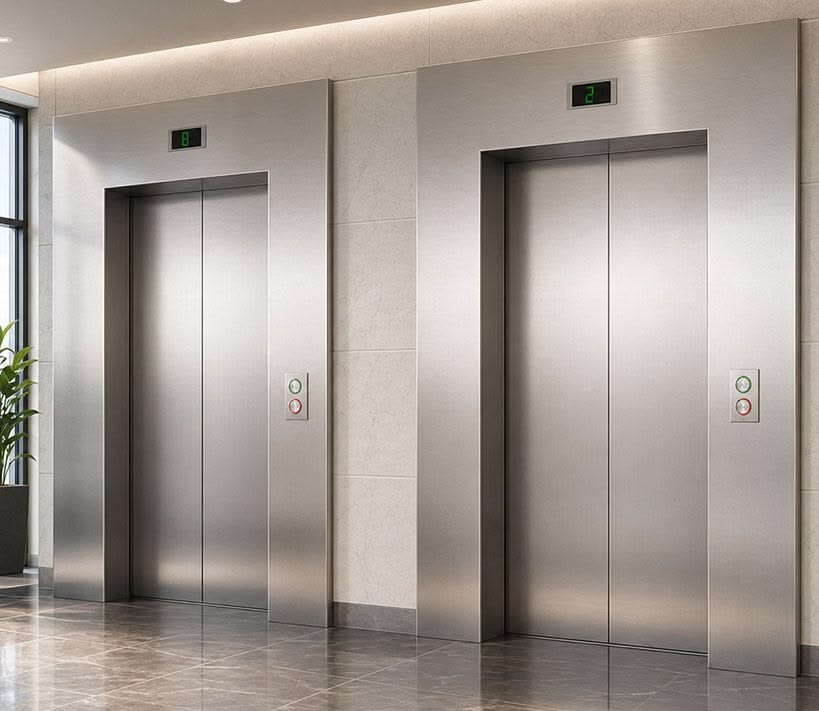
Elevators are used in commercial buildings throughout the day such as offices, malls, hotels, hospitals, residential societies, colleges, universities, and others. Due to constant usage, proper maintenance is necessary to ensure safety and smooth running of elevators. A comprehensive list for the Commercial Elevator Maintenance Checklist in Kaithal will help in checking various parts of the elevator and avoid any problems that could turn into serious ones.
Maintenance also helps in providing comfortable ride, minimizing downtimes, increasing the life of elevator equipment, and working of the elevator efficiently. JK Elevator offers design, manufacture, installation, and maintenance services of elevators for various types of buildings. Services provided by JK Elevator include passenger elevators, hospital elevators, hydraulic elevators, industrial elevators, home elevators, capsule elevators, car elevators, and others.
Why Commercial Elevator Maintenance Is Important
There are several mechanical, electrical, and safety components involved in each ride in a commercial elevator, which, due to regular usage, might undergo deterioration of their performance. It will be possible to perform the inspection of those components regularly, which will allow identifying any unusual noise, vibrations, door malfunctions, malfunction of the leveling system, problems with electricity, and wear of components. Adherence to the checklist for commercial elevator maintenance in Kaithal will enable the management of the facility to maintain control over the process.
Maintenance Checklist For Commercial Elevators
The complete checklist will need to encompass the essential features of the system's functioning and safety. These particular maintenance needs will vary from one type of elevator to another based on its manufacturing company and other factors.
1. Elevator Car Inspection
Inspection should include checking the condition of the cabin, lightening, ventilation, flooring, handrails, display indicators, and control buttons.
Also, one should pay special attention to the process of starting, stopping, and leveling up at every floor. Any abnormal vibration, jerking, or noise should be addressed technically.
2. Elevator Doors Inspection
Elevator doors are among the most used parts of a commercial elevator. In order to carry out a proper inspection, technicians need to check:
- Door operation
- Door sensors
- Door locking and interlocking devices
- Rollers and tracks
- Door alignment
- Automatic door operator
- Unusual noise in the course of movement
Any abnormalities in the process of door operation (opening too slowly, staying opened or producing some unusual noises) may indicate future problems.
3. Motor and Drive System
Motor and drive system is very crucial in elevator operations. Technicians need to check the condition of their performance and any issues like abnormal noises, vibration, overheating, among others.
Checking the drive system may also facilitate smooth acceleration and deceleration of the elevator.
4. Control Panel Inspection
Control panel takes care of various elevator operations. Maintenance technicians need to inspect all electrical connections, controllers, indicators, among other systems.
Any kind of error indication from the control panel should be inspected and not taken lightly.
5. Brake System Inspection
The braking system is quite critical in facilitating controlled elevator movement and stopping. Technicians are expected to inspect brake system in accordance with maintenance guidelines issued by the elevator manufacturer. Any abnormal brake sounds, late stoppage, among other issues call for inspection by professionals.
6. Guide Rails and Moving Components
Inspection of guide rails and associated moving parts should include an assessment of their condition, alignment, need for lubrication, and any abnormal wear.
Lubricating some of these moving parts could result in lower friction and improved movement of the elevator. Lubrication should be done in accordance with the manufacturer's guidelines.
7. Testing of Safety Systems
Safety systems should be regularly checked and tested by professionals. The test includes checking emergency alarms, safety mechanisms, door interlocks, overload protection, communication, and automatic rescue operations, among others, depending on the type of elevator.
JK Elevator emphasizes safety systems like ARD, overload detection, and other approved safety equipment in its elevator systems.
8. Emergency Alarm and Communication
Emergency alarm and communication system should be regularly tested. Occupants of the building should have the means to contact the relevant security or emergency assistance.
Information regarding who the building occupants should contact in an emergency should also be available.
9. Electrical Connections
All electrical connections, wiring, switches, terminals, and other electrical equipment must be checked by qualified technicians.
Loose connections and damaged wiring may impact the working of the elevator and must not be tampered with without adequate technical knowledge.
10. Lubrication and Cleaning
Lubrication of all applicable mechanical components must be carried out as per the schedule provided by the manufacturer. The area containing the elevator machinery as well as other technical areas must also be kept clean and clear of any unnecessary material.
This can help technicians detect leaks, damaged parts, loose connections, etc., easily.
Preventive Maintenance of Commercial Elevators
This kind of maintenance involves the detection of any problem in the elevators that could cause the breakdown of the elevator system. This is done by carrying out checks on vital parts based on a planned schedule.Commercial Elevator Maintenance Service Provider Kaithal provides the following services: component inspection, lubrication, electrical inspection, safety test, door inspection, performance test, and part replacement where needed. The frequency of preventive maintenance is determined by the type of elevator, traffic level, operating hours, manufacturer instructions, and the condition of the building.
Advantages of Commercial Elevator Maintenance
There are a number of advantages offered by maintenance programs:
Greater Reliability
Inspection enables detecting worn or broken parts before they cause any trouble.
Decreased Unplanned Breakdowns
Maintenance can help decrease the risk of unexpected malfunctioning of the device and disruptions in building activity.
Increased Passengers' Comfort
Maintenance of doors, drive mechanisms, guides, and controls increases comfort for passengers.
Increased Serviceable Lifespan
Professional maintenance will make possible prolonged serviceability of elevators.
Better Safety Control
Periodic inspection will facilitate proper care about safety systems.
Commercial Elevator Maintenance Record Keeping Steps
Managers of facilities must keep a written or electronic maintenance record for all the commercial elevators. The information that can be documented includes:
- Date of inspection
- Information about the technician
- Component that was inspected
- Issues found during the inspection
- Repairs made
- Parts that were changed
- Lubrication carried out
- Tests that were done for safety
- Next maintenance date
Proper record keeping facilitates identification of recurring issues.
Choosing Commercial Elevator Maintenance Services in Kaithal
When selecting a maintenance provider, building owners should consider technical experience, service coverage, spare-part availability, response capability, maintenance documentation, and familiarity with the elevator type installed at the property.
A provider that understands both elevator technology and preventive maintenance can help building managers create a maintenance plan based on actual operating requirements.
JK Elevator states that its maintenance approach includes scheduled servicing and emergency support, while its team handles elevator installation, testing, and ongoing technical assistance.
Conclusion
A well-planned Commercial Elevator Maintenance Checklist in Kaithal helps facility managers monitor elevator performance and maintain important mechanical, electrical, and safety components. Regular inspection of the cabin, doors, motor, drive, controller, brakes, guide components, electrical systems, and emergency functions can help identify potential problems early.
For commercial properties, preventive maintenance is an important part of maintaining reliable elevator operation. Professional Commercial Elevator Maintenance Services in Kaithal can provide technical inspections, scheduled servicing, safety checks, repairs, and maintenance support according to the elevator's requirements.
For commercial buildings looking for professional elevator installation, maintenance, and technical support, JK Elevator offers a range of elevator solutions designed for different applications.


